I usually wind down after a busy day listening to the ruckus of Indian politics, usually while multi tasking. Indian TV debates are almost like being in a busy Indian railway stations. It is a cacophony of a few hundred people talking all at once and somehow managing to yell loud enough to be heard by the other amidst all the din. In one such debate I heard this word Sengol. I’m a tamilian by birth and origin but can hardly boast of my fluency, so I have always known of sengal, which means brick, but never Sengol. So i was perplexed to hear this new word for the first time and I had to research it.
Now I’m savvy with how, in today’s internet driven world, you can make fiction look like fact. All you need to do is have someone create a Wikipedia page, stick in a few references which often can be obscure and all of a sudden you have created “fact“. To top it off, if you get a media frenzy you will see so much of junk you will be left wading neck deep through intellectual debris. So to save myself the effort I googled for articles from 1/1/1900 to 1/12/2022. Lo behold all I got was a movie case between Varun Rajendran and AR Murugadoss for plagiarizing his movie Sengol.

So clearly Sengol didn’t make the news before Jan 2023. So I tried Google translate and I found it meant “scepter”. Clearly I should remove Tamil from the list of languages I fluently speak or this is indeed as obscure a reference as one could imagine. Truly after pouring over hundreds of Google pages I could not find a single web link to anything about Sengol between 1/1/1900 to 12/31/2022. I admit the search is a bit exaggerated given Google was launched in 1998. Then I googled for Chola sceptre and I finally struck gold.
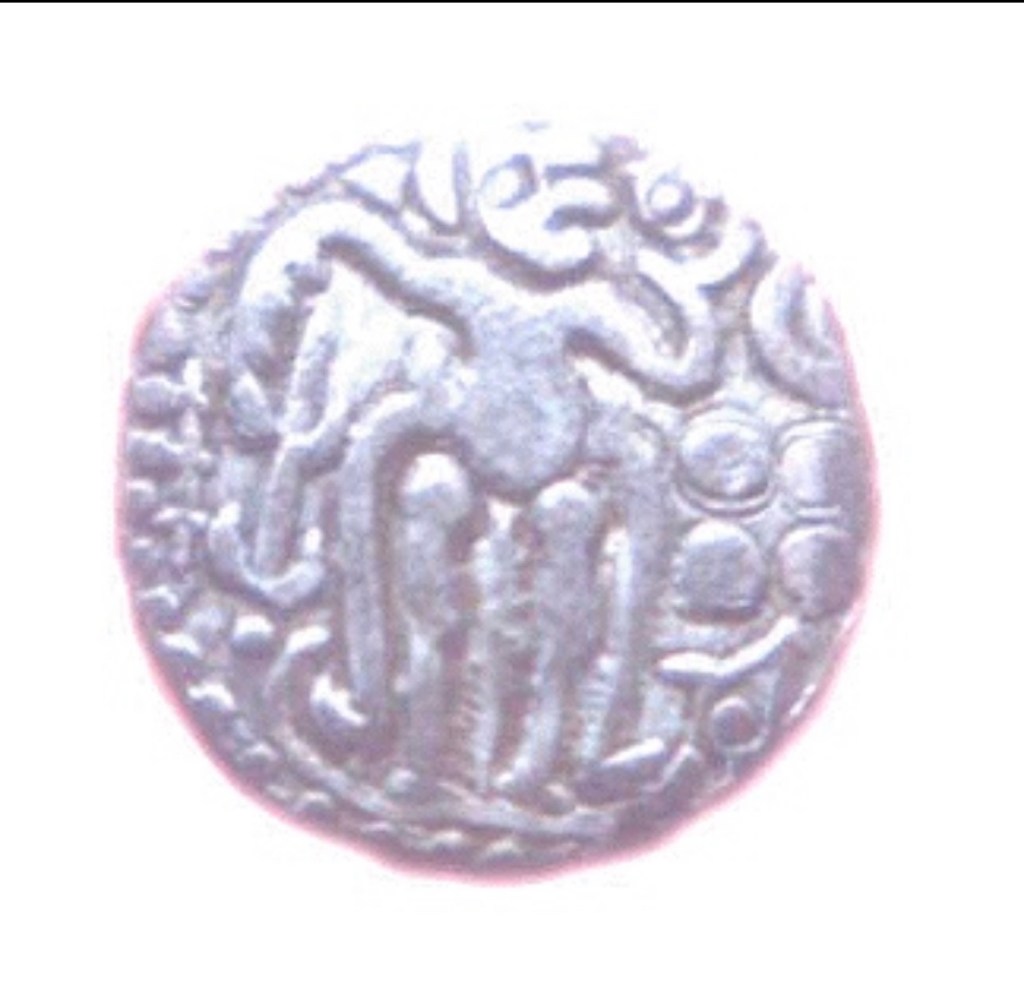
Apparently it was a metal coin with a figurine of a king with a lotus (symbol of regeneration) in the left hand and a sceptre in the right. Well to be fair I also found this stone tablet, apparently with a sceptre and an eagle
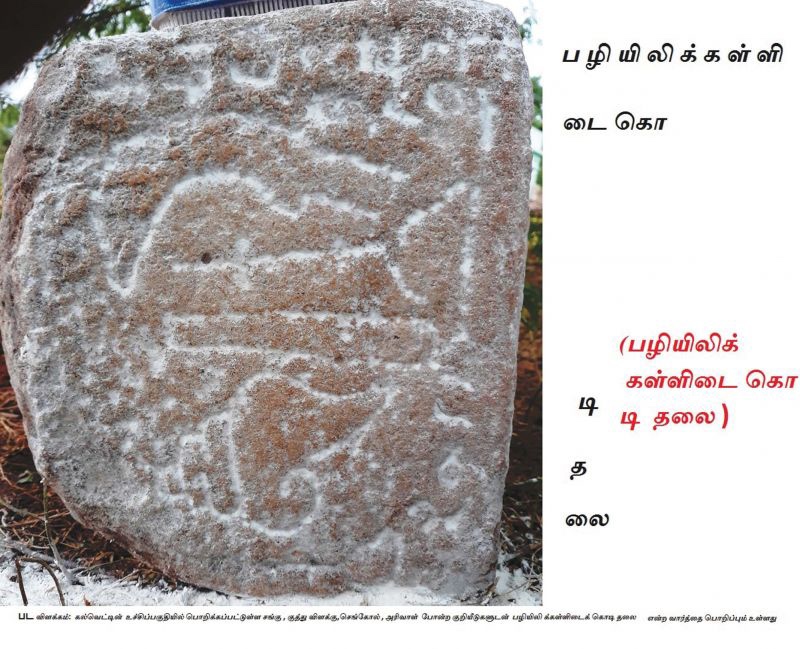
I almost expected to find hundreds of antiques and carvings of this golden sceptre. But at least we now know from the coin and the tablet that Rajendra Chola-I and other Chola kings did carry a sceptre a thousand years ago.
So now let’s look at Nehru’s walking stick below, sorry, I meant sceptre. Apparently, Allahabad museums had wrongly labeled it as his walking stick.

This time I searched for Nehru and Scepter and I got lucky, Voila! I managed to find a Time magazine’s historical recount of the events leading to India’s independence on the 25th August 1947, scripted in great detail, titled “INDIA: Oh Lovely Dawn”.
Blessing with Ashes. Even such an agnostic as Jawaharlal Nehru, on the eve of becoming India’s first Prime Minister, fell into the religious spirit. From Tanjore in south India came two emissaries of Sri Amblavana Desigar, head of a sannyasi order of Hindu ascetics. Sri Amblavana thought that Nehru, as first Indian head of a really Indian Government ought, like ancient Hindu kings, to receive the symbol of power and authority from Hindu holy men.
Page 1- INDIA: Oh Lovely Dawn Monday, Aug. 25, 1947
With the emissaries came south India’s most famous player of the nagasaram, a special kind of Indian flute. Like other sannyasis, who abstain from hair-cutting and hair-combing, the two emissaries wore their long hair properly matted and wound round their heads. Their naked chests and foreheads were streaked with sacred ash, blessed by Sri Amblavana. In an ancient Ford, the evening of Aug. 14, they began their slow, solemn progress to Nehru’s house. Ahead walked the flutist, stopping every 100 yards or so to sit on the road and play his flute for about 15 minutes. Another escort bore a large silver platter. On it was the pithambaram (cloth of God), a costly silk fabric with patterns of golden thread.
When at last they reached Nehru’s house, the flutist played while the sannyasis awaited an invitation from Nehru.
Then they entered the house in dignity, fanned by two boys with special fans of deer hair. One sannyasi carried a scepter of gold, five feet long, two inches thick. He sprinkled Nehru with holy water from Tanjore and drew a streak in sacred ash across Nehru’s forehead. Then he wrapped Nehru in the pithambaram and handed him the golden scepter. He also gave Nehru some cooked rice which had been offered that very morning to the dancing god Nataraja in south India, then flown by plane to Delhi.
Well given it’s Time magazine and was written on the 25th Aug 1947. It’s fair to say the Sengol was for real. Even though the word scepter was mentioned twice in a 1347 word article. The momentous occasion of handing over the scepter occupied 3 paras and was described in great splendor of the joyous celebration.
The sceptre was handed over on the 14th August 1947, the then viceroy Mountbatten was nowhere in the picture on that day (presumably, he was in Karachi declaring Pakistan independent), India was declared independent on the 15th August 1947 and a republic two and half years later on 26th January 1950, which is when power was truly handed over by the British to the parliament of India under its newly instituted constitution. And most importantly power was not handed over to Nehru, for obvious reasons, India was not a monarchy. Apart from all the factual distortions, the story of the sceptre being the divine vehicle through which the British handed over power to Nehru (not India) must be the only piece of undocumented Indian history unearthed through an Adheenam spokesperson’s claim of the existence of a souvenir having recorded such an unlikely event.
However it’s possible Sri Amblavana Swami did intend it as a symbolic gesture to recognize Nehru as the new leader of the nation as it was done with ancient Chola kings.
Sri Ambalavana Swami was the 1947 head of the Thiruvaduthurai Adheenam.
The Adheenam is involved in publishing Saivite literature, specifically Thevaram and Tiruvasakamand its translations. It is also involved in literary scholarship. Some of the prominent Tamil literary personalities like Meenakshi Sundaram Pillai had their tutorship in the Adheenam. His disciple U V Swaminatha Iyer, who published many Tamil classical texts also was associated with the organization.
Wikipedia: Thiruvaduthurai Adheenam
The Thiruvaskam was considered significant enough for it to be translated to English by Pope George Uglow in 1900. There are many Adheenams; Thiruvaduthurai manages 15 south Indian temples, Thiruppanandal owns massive tracts of land in the Thanjavur district, Dharmapuram manages 29 temples and Mathurai manages 4 temples. Apart from its literary and religious importance, Adheenam managed the temple’s land and money. So while he was not the definitive divine authority, Sri Ambalavana Swami was then a man of significant stature in southern India.
Ever since the Ancient Egyptians sceptre was symbol of power but it’s important to understand India’s idea of Kingship, succession and the ceremonies associated with it. According to Indian idea of kingship by Susheel Kumar Sharma, Vinod Kumar Singh in the Indian Journal of Political Science:
- the kings pleases and protects the people according to the law, it is believed that at the request of suffering humanity , to re-establish ordering the society, the lord created the king to administer the code of law (Manu 7.3, Mahabhartha Shantiparva 67.17-29)
- Indian kingship is not an absolute monarchy unlike European tradition. Hence only a king who protects order in the best manner is the lord of the earth.
- In India a king does not enjoy absolute authority contrary to the rules of the state. Thus in Indian tradition law is supreme and the king is subordinate to it.
- God created law (danda) and the king to protect it, the word Danda is also interpreted as staff and hence it may have been used as symbolism for the one who wields the instrument of legal punishment
- In India a royal coronation is conducted by the priest who is the interpreter of all laws. During the ceremony the king is symbolically chastised shows he too is subordinate to the law
- Moreover the the theory of divinity does not impose an absolute obligation to obey a king or his laws and people are permitted to depose and even to execute a king.
- King visits the house of the ministers and high officials seeking approval of his succession pre-coronation
- In the actual coronation:
- The king is anointed and seated on the throne covered wth tiger skin
- He is sprinkled with sacred water brought from holy rivers, seas, ponds and wells of the state
- The priest chants Vedic chants
- The king takes an oath to govern righteously, to refrain from oppressing the people and never to transgress provisions of the law
- Thereafter he is symbolically beaten by the priest with the help of a stick to show the he too is sub-ordinate to the law
- As the supporter and upholder of law a king’s responsibilities are great. He being the first citizen his subjects are naturally prone to emulate him. It is in this respect that he is regarded as the marker of an age. It is he who is responsible for ushering in the golden age or an age of strife.
- An ideal king is one who has the following highest qualities of leadership, intellect, energy and all the glorious virtues.
- In India kingship is seen to be hereditary and follows patrilineal primogeniture, since it is very difficult to find a person with all the innate qualities of a king, the training and preparation to be a king is initiated to the heir apparent from conception
The Sengol ceremony in the parliament is replete with symbolism. First the chanting of vedas and the introduction of the Sengol into the parliament is to firmly establish that the country is governed by a higher-divine Hindu dharma (law) that supersedes the constitution. Hence the choice of 28th May for the ceremony to be held, which was also the birth of Veer Savarkar, the founder of Hindutva.
Now why Sengol and not Dharma danda for a largely Hindi speaking BJP and Mr. Modi? By recalling the events of 14th August it is meant to juxtapose a transition of power from the coloniser to the liberators, with the transition of power from the Congress to the BJP.

So the prime minister prostrating in front of the sceptre (danda), the instrument of legal punishment, representes him recognising the law is above the king.
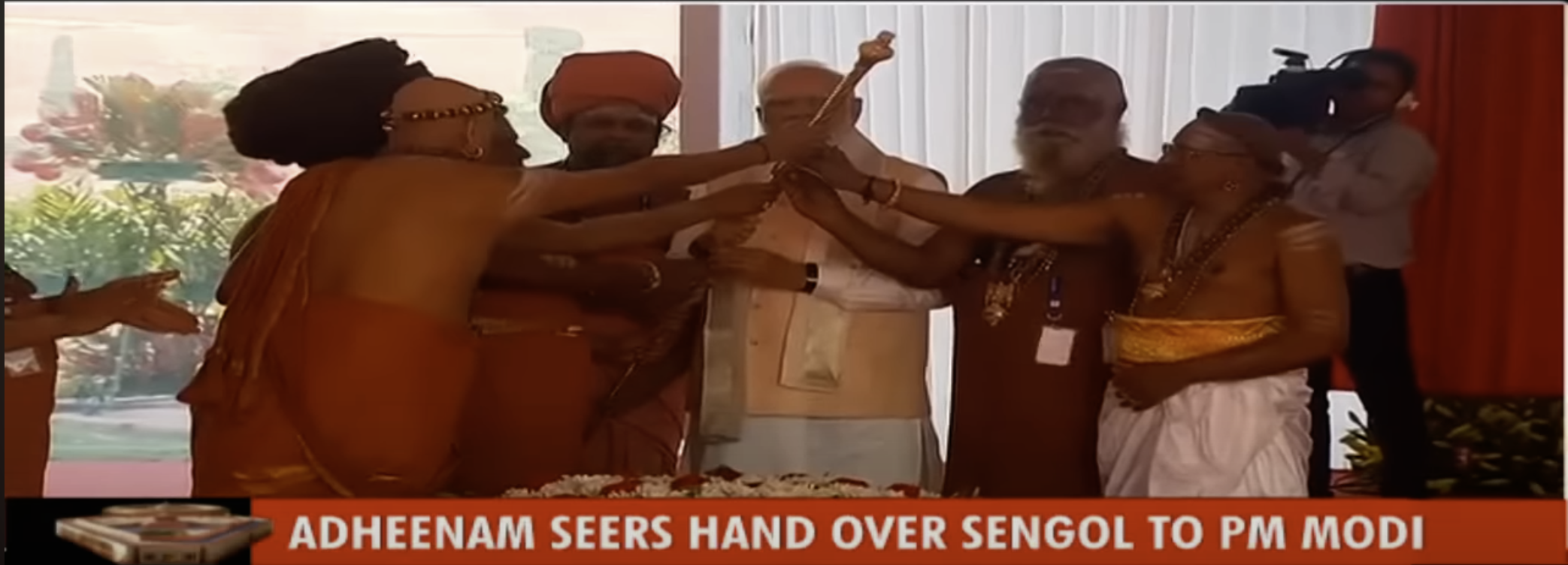
When all the heads of the Adheenam, meant to represent the priests or the original interpreters of divine laws, in unison hand over the Sengol or danda (staff), it is symbolism to imply that Narendra Modi alone wields the instrument of legal punishment and is the custodian of all law and order. It is a further attestation of Narendra Modi possessing the highest qualities of leadership, intellect, energy and all the glorious virtues of a king. With it he is meant to be the marker of an age and the usherer of a golden era.

 AVALUECREATOR