
This blog could easily be an excerpt from a Robin Cook novel. In this blog I carefully sequence a strange set of coincidences that could at the least be one of the most imaginative works of fiction. If one cares to join this adventure with me, they must be a time traveler of sorts, following the little breadcrumbs along a heavily wooded trail.
Risk vs Benefit perception
On December 10th 2014, Harvey V. Fineberg, Professor of Health Policy and Management, Emeritus in Harvard made a candid, yet a speech meant to obfuscate in the Herrenhausen Symposium on “Dual use Research on Microbes: Biosafety, Biosecurity, Responsibility”. His talk is on Decisions about Gain of Function Research, Who bears the burden of proof. In this speech, he highlights the announcement in October 17th 2014, by the United States government, that any further funding into Gain of Function Research on three organisms; Influenza, Corona Virus of SARS and Corona Virus of MERS, will be paused. Specifically the announcement charged NSABB to make policy and practices that should be pursued while conducting Gain of Function Research. This was a significant departure from the U.S. government’s 2012 position wherein it said Gain of Function Research may proceed with exception of an umbrella of 15 special concerns. This announcement was a direct result of three breaks that were reported in CDC around July 2014 under the National Institute of Health where Anthony Fauci served for over 50 years since the Reagan administration .
- An exposure to Anthrax of several employees
- A discovery in an abandoned laboratory small pox virus that no one had kept track of
- The inadvertent distribution of a more dangerous variant of influenza virus that fortuitously sent to another BL3 laboratory thereby averting an outbreak
It is important to note that the EcoHealth Alliance Inc was granted funding from NIH in June 2014 to start a project, number 2R01AI110964-06 called Understanding the Risk of Bat Coronavirus Emergence. It is via this project that the Wuhan lab received funding for Gain of Function Research. It is stated in an NIH publication that “This project seeks to understand what factors allow coronaviruses, including close relatives to SARS, to evolve and jump into the human population by studying viral diversity in their animal reservoirs (bats), surveying people that live in high-risk communities in China for evidence of bat-coronavirus infection, and conducting laboratory experiments to analyze and predict which newly-discovered viruses pose the greatest threat to human health”. “We will use phylogeographic and viral discovery curve analyses to target additional bat sample collection and molecular CoV screening to fill in gaps in our previous sampling and fully characterize natural SARSr-CoV diversity in southern China. We will sequence receptor binding domains (spike proteins) to identify viruses with the highest potential for spillover which we will include in our experimental investigations (Aim 3). Aim 2. Community, and clinic-based syndromic, surveillance to capture SARSr-CoV spillover, routes of exposure and potential public health consequences.”
It has to be an odd coincidence that this was done so close to the leaks going public which in turn prompted the controls that were to ensue. The nature of the research specifically looks to evaluate the crossover of the virus from the bats to humans and sequencing of the spike receptors.
Fineberg further highlights, while defining the controls, there lies a risk of decision bias that may influence risk vs. benefit decisions as a result of the Framing Effect by Daniel Kahneman and Amos Tversky.
Problem 1: 600 people are at risk of dying due to a disease.
- Apply a treatment where 200 will certainly live
- Apply a treatment with 1/3rd probability that all will live vs. 2/3rd probability that none will live
Problem 2: 600 people are at risk of dying due to a disease.
- Apply a treatment where 400 will certainly die
- Apply a treatment with 1/3rd probability that none will die vs. 2/3rd probability that all will die
As per the framing effect people are more likely to chose option 1 to the problem statement 1 and option 2 to the problem statement 2. This is despite the fact that both are identical problem statements and options, but just framed differently. So in other words he says if one is an advocate for the Gain of Function Research they would highlight the risks of failing to conduct the research.
The second effect he warns about is the Attribution effect. Wherein people are more willing to accept an outcome caused by natural causes as against human action.So people are more accepting of an infection caused in the wild as against an infection that is caused when a virus escapes a laboratory.
Finally he concludes by saying that while there are national level debates there is a need for global standards and procedures to manage the risks of the research. Most importantly he expresses his skepticism on how far self regulation will work.
Building the threat Perception
Now let us go back to what happened in 2012 when the government allowed Gain of Function to proceed. There was a Gain of Function Workshop organized by NIH titled “Gain of Function Research on Highly Pathogenic Avian Influenza H5N1 Viruses”. The first presentation was by Anthony Fauci.

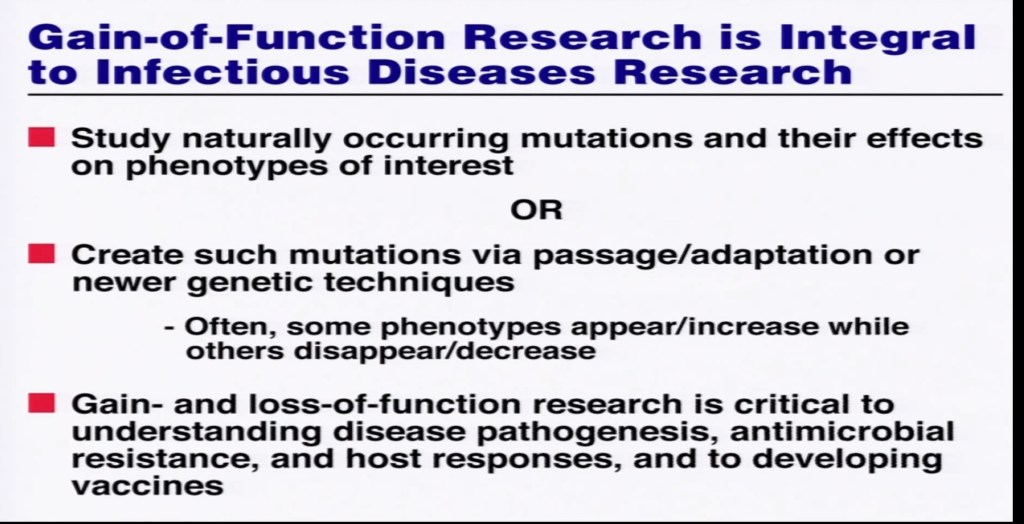
Fauci deftly maneuvers his audience by raising the threat perception of death due to the lack of vaccines using the Framing Effect. He then creates the Attribution effect by raising the perception of deaths due to natural causes vs. vaccination. He was clearly an advocate for the Gain of Function Research.
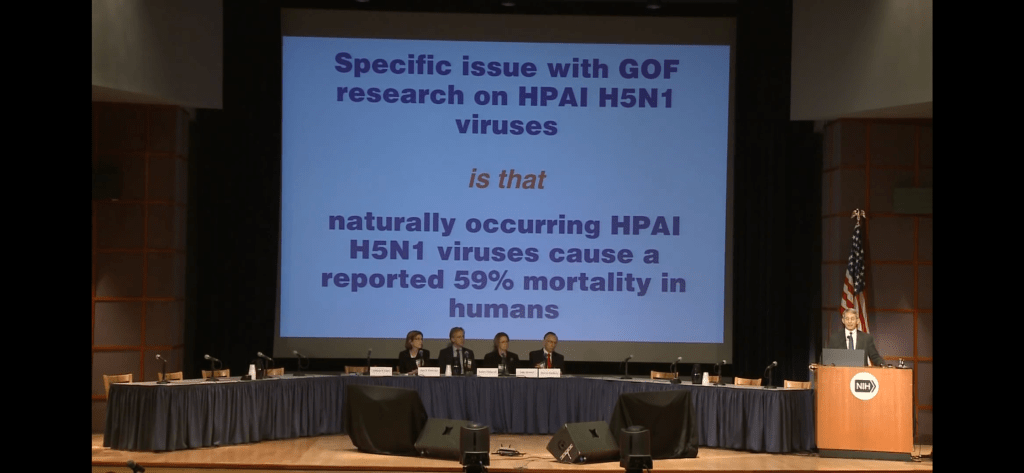
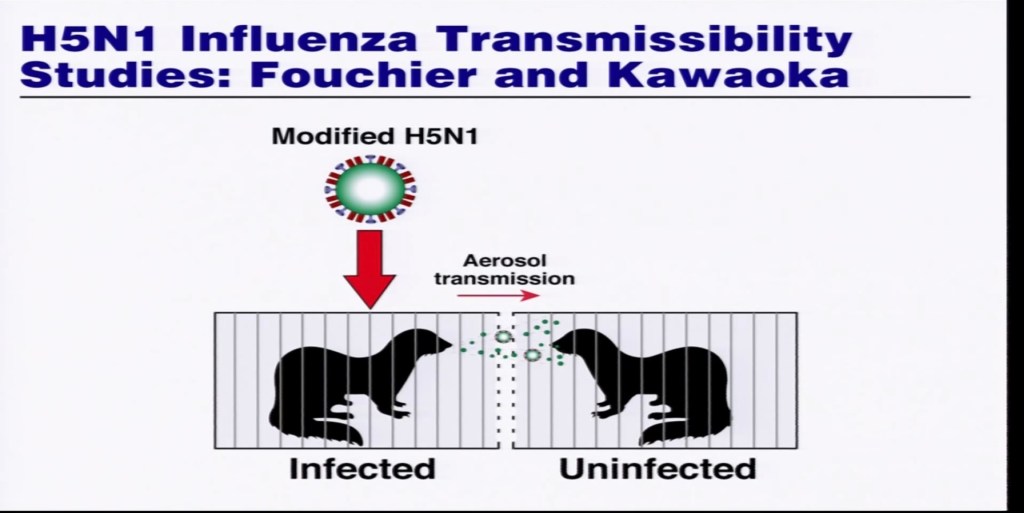
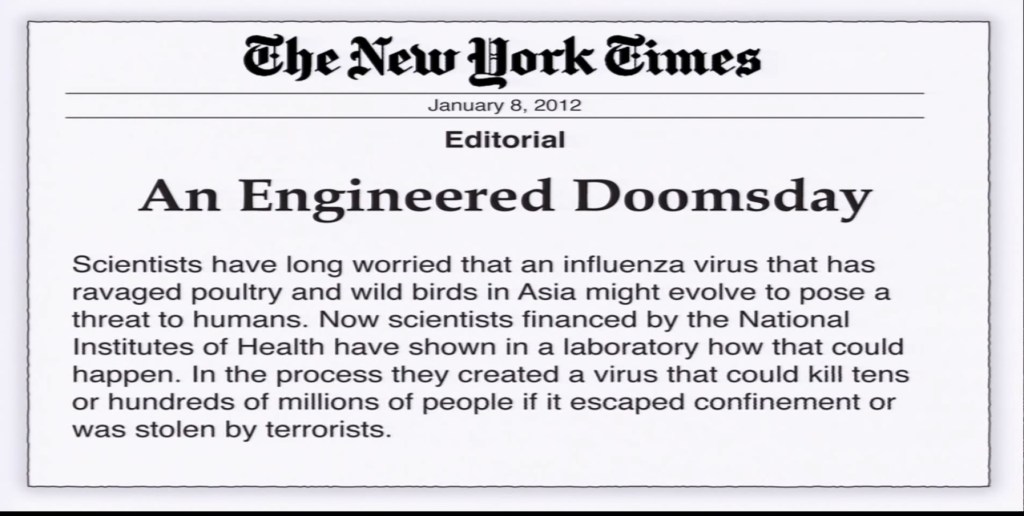
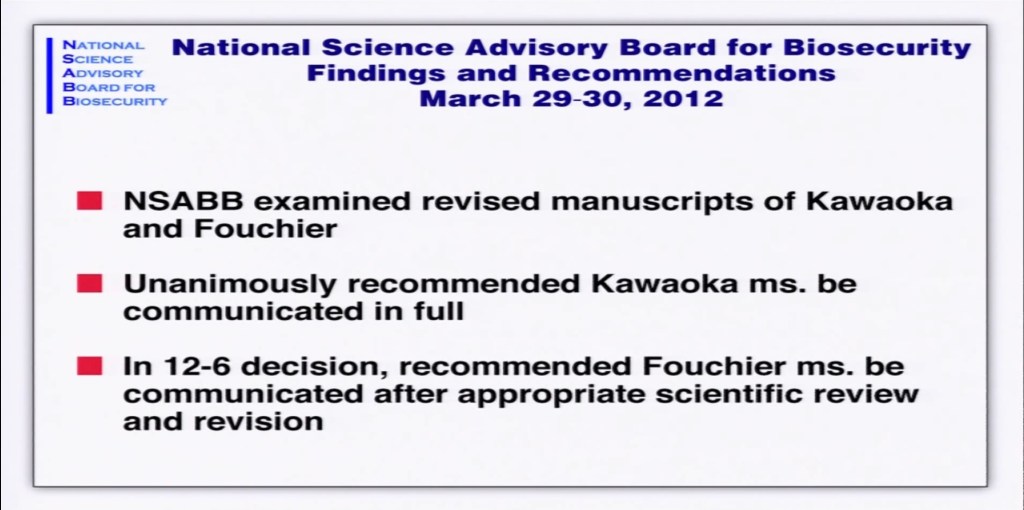
Finally he concludes his presentation changing the real problem to a question of funding as against controls to determine whether the Gain of Function methodology should be made widely available. He does this by quoting the decision made by NSABB regarding the Gain of Function Research by Fouchier and Kawaoka. Wherein NSABB cleared the path for their research to be widely available in March 2012. This was done despite the earlier well understood threat of the Gain of Function Research falling into the wrong hands.
So it almost seems like Henry Feinberg subsequently in 2014 was warning his audience of what Fauci did in 2012, what eventually convinced the government not to enforce overbearing controls on the Gain of Function Research. At least he felt that was not the best approach going forward, especially after the three leaks.
Anthony Fauci most recently makes a presentation at Harvard Law School Outbreak Week event in September 2019. Here he once again starts his presentation by raising the threat perception of a Pandemic spread through natural causes. He thereby raises the risk appetite of his audience in favor of Gain of Function Research despite the risk of leaks creating a perfect storm of a global pandemic with no cure.
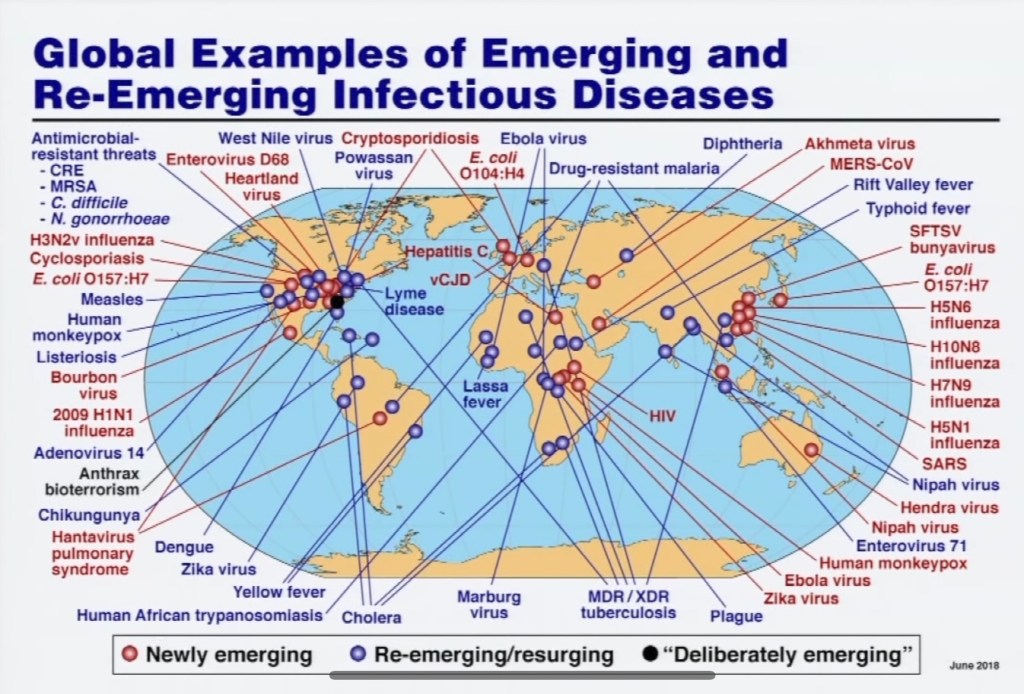
The Playbook
At Harvard he also lays out a playbook of a typical pandemic spread.
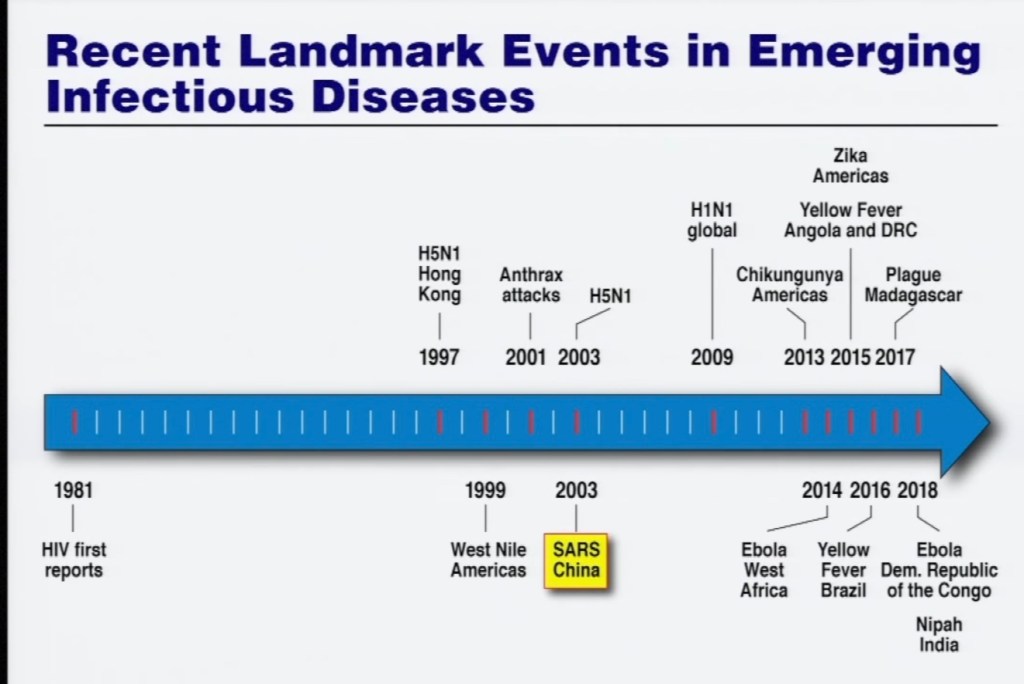
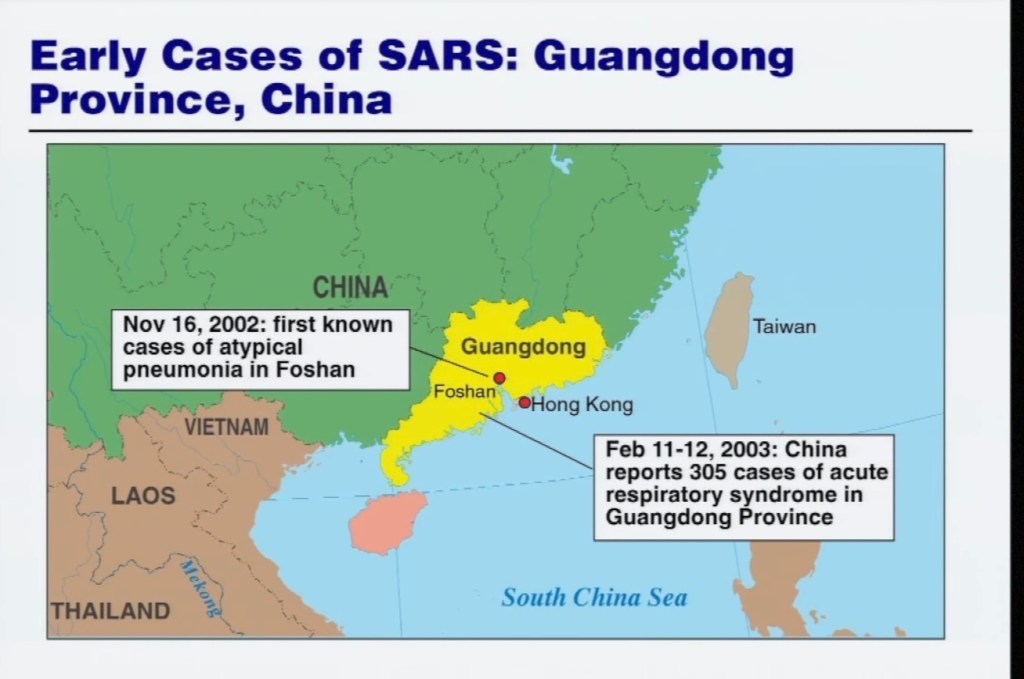
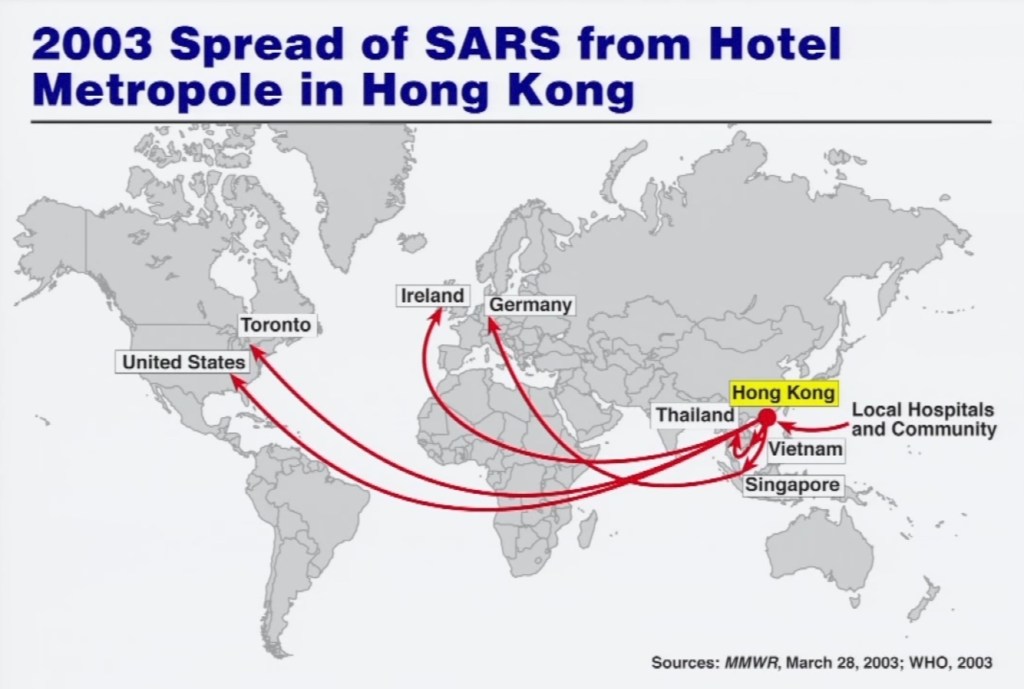
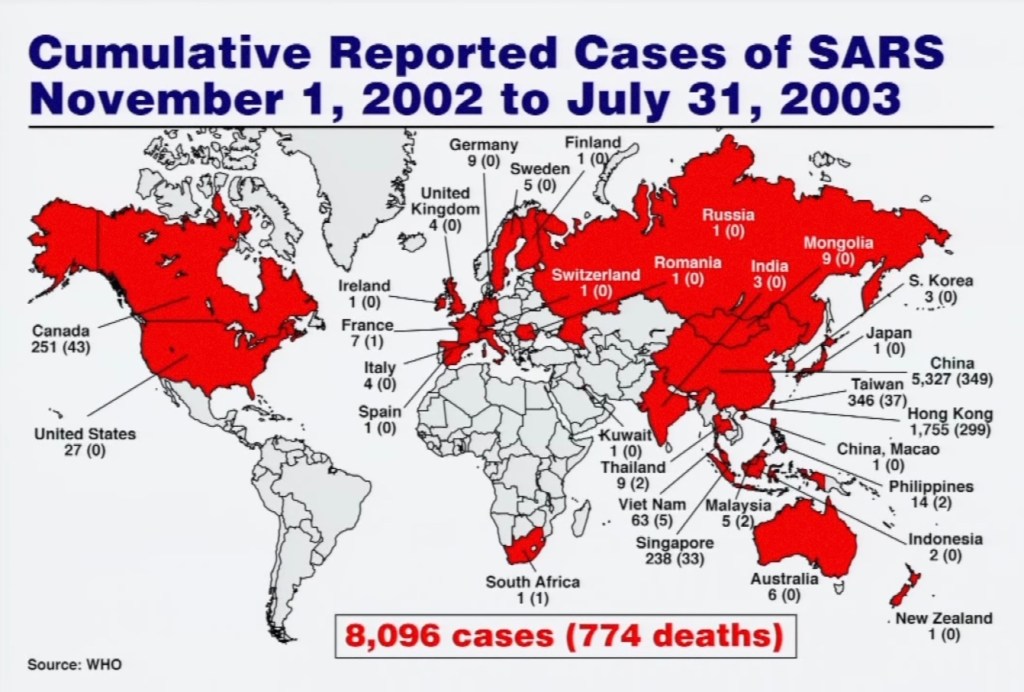
The similarities are chilling to the events in 2019. In September 2019 the first COVID-19 case was identified in Wuhan. Soon after China went ahead with their CIIE (China International Import Expo) from 5th to 10th November 2019 attended by 500,000 trade visitors from all over the world in Shanghai, this could have been the real super spreader event that made this a global pandemic. China suppresses reporting any cases until Dec 2019.
Vaccines too little too late
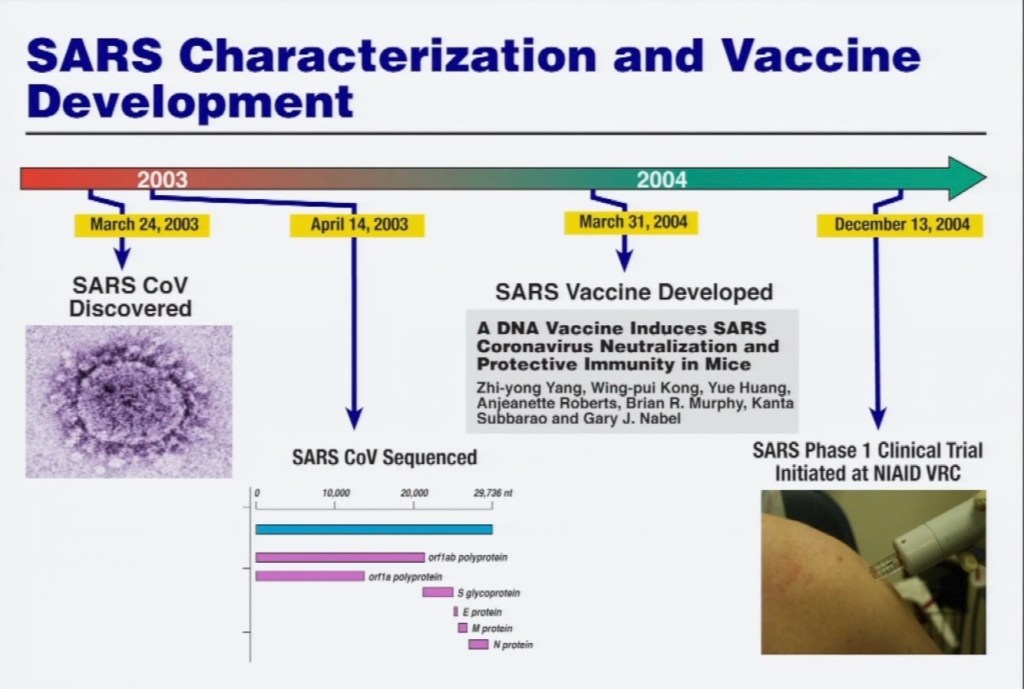
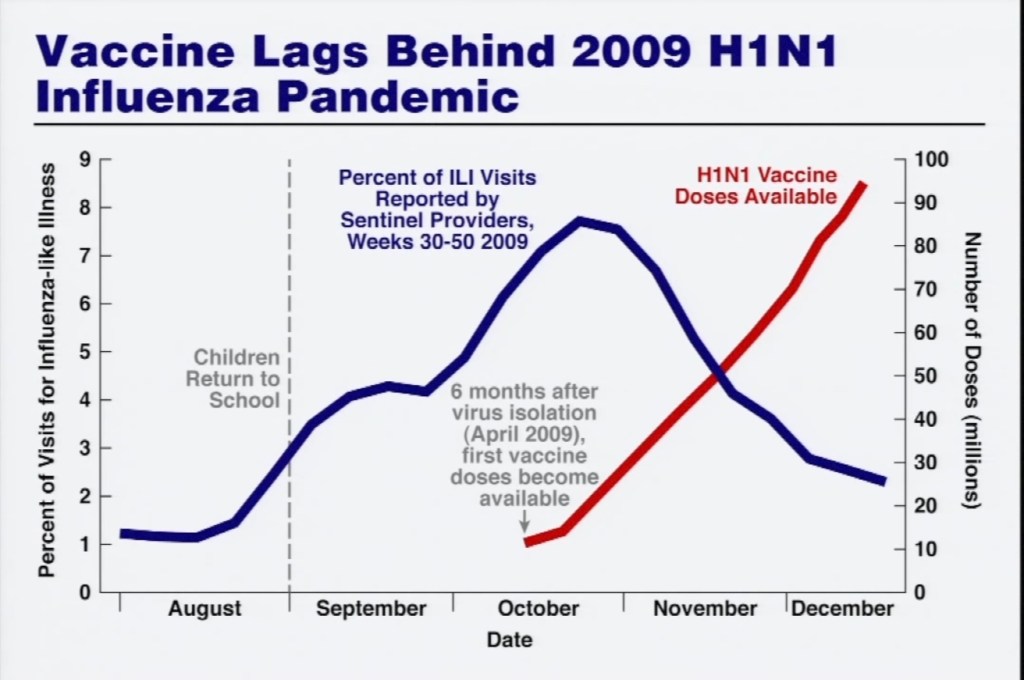
Fauci in his 2018 Harvard Law address goes on to explain the challenges in vaccine development, it just takes too long he says. So by the time a vaccine is ready the virus threat has subsided as immunity builds. In case of H1N1 he highlights that the vaccine almost arrived 6 months too late. Therefore vaccines are not good for business.
Build a platform and keep it warm
To address the time taken to build vaccines problem he proposed a novel platform concept wherein the government invests in labs that are vaccine factories and can manufacture a vaccine in a very short time by grouping the genus of similar viruses and developing blueprint solutions. By doing this he says the time to develop a vaccine can be significantly shortened from the time of declaration of a public health emergency. He further highlights how his blueprints enable early human trials within 3-4 months by closely working with FDA to expedite clearance.
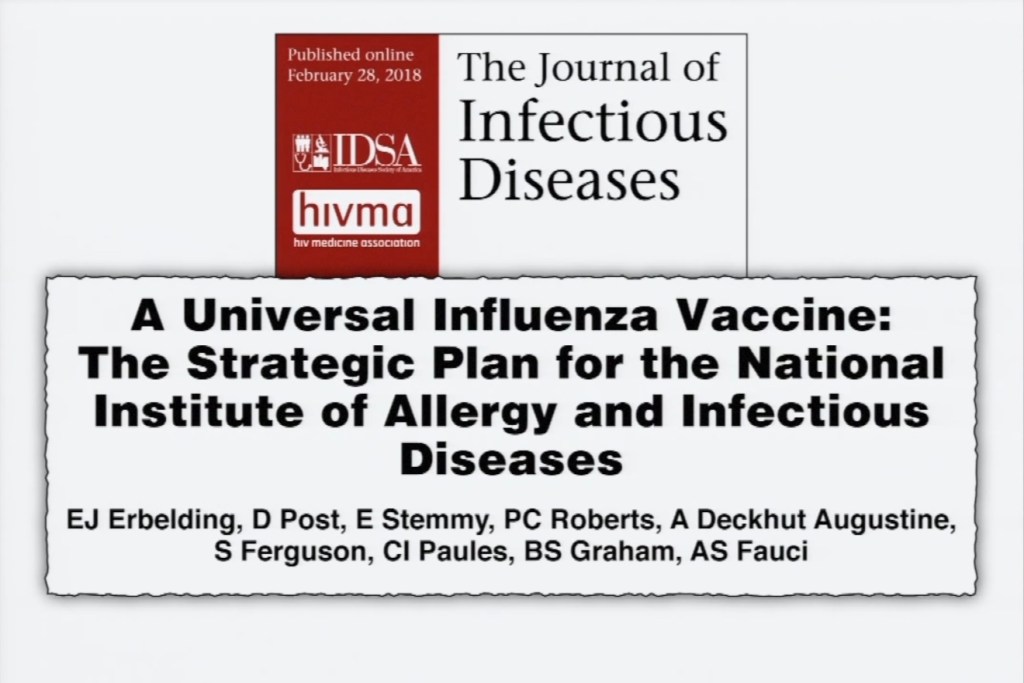
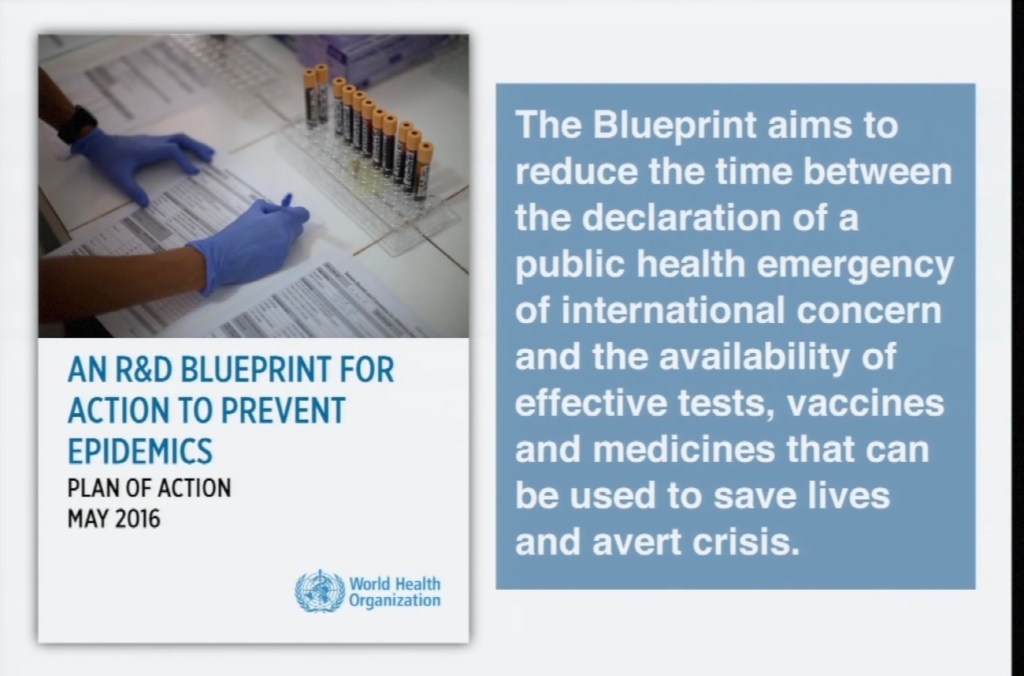
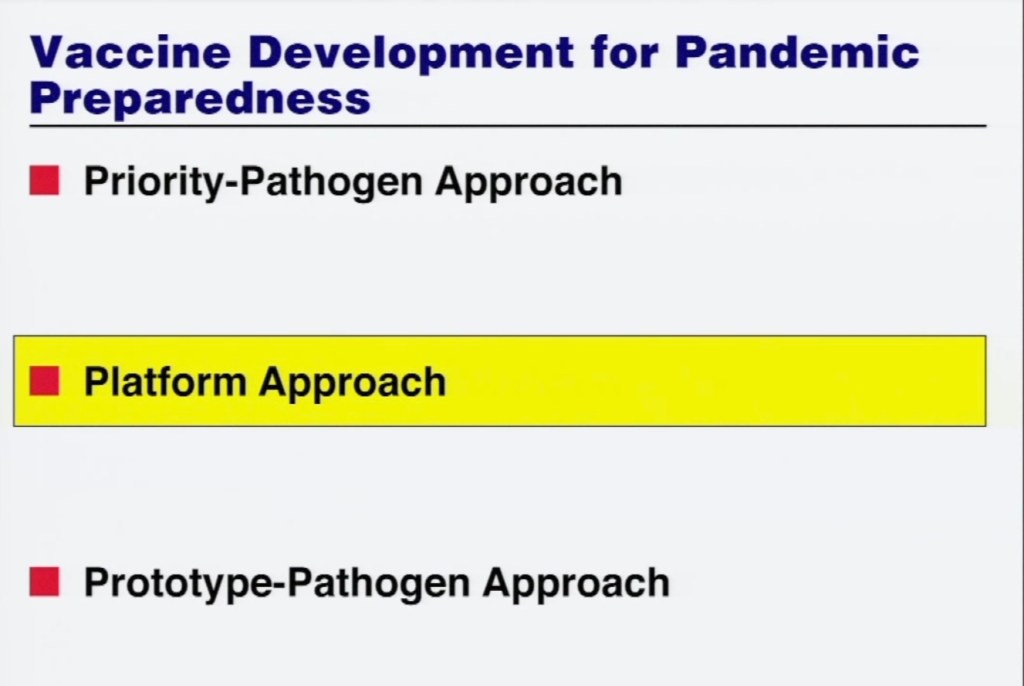
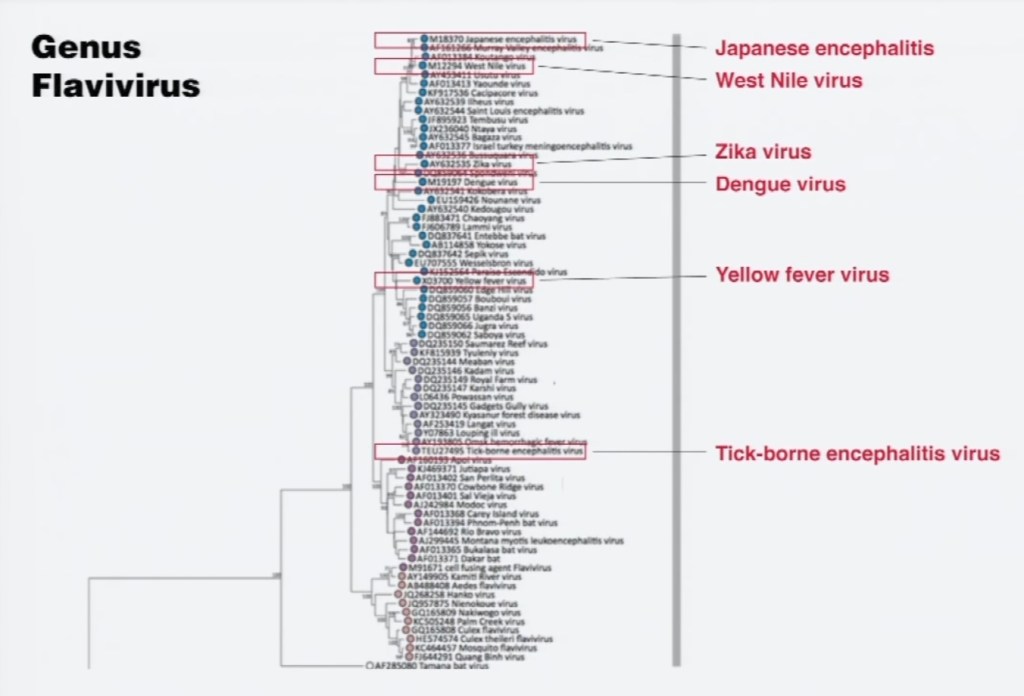
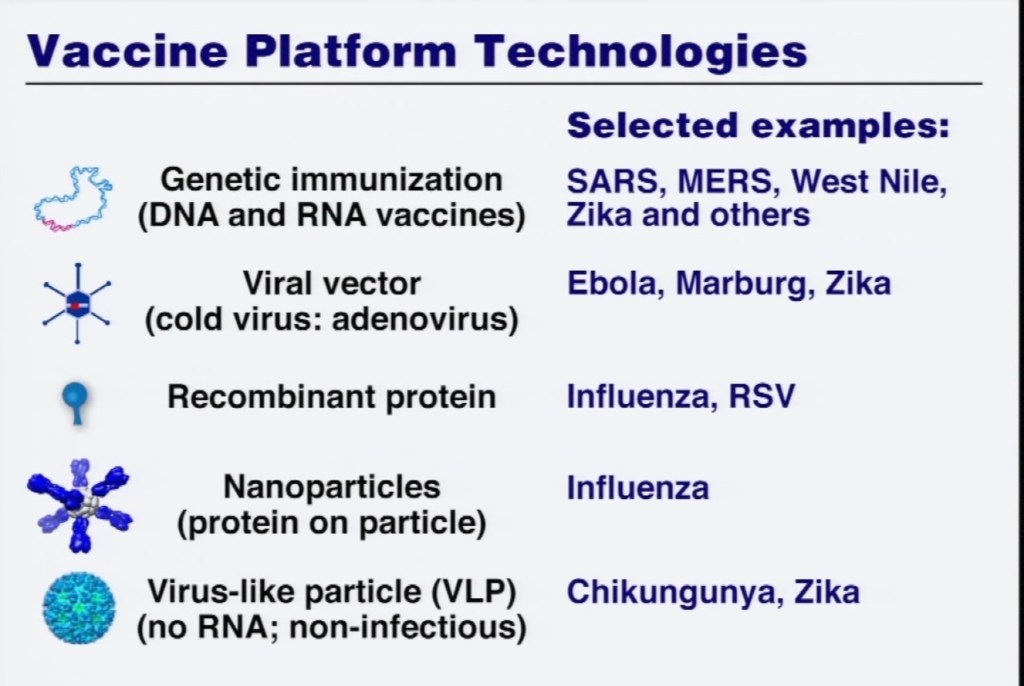
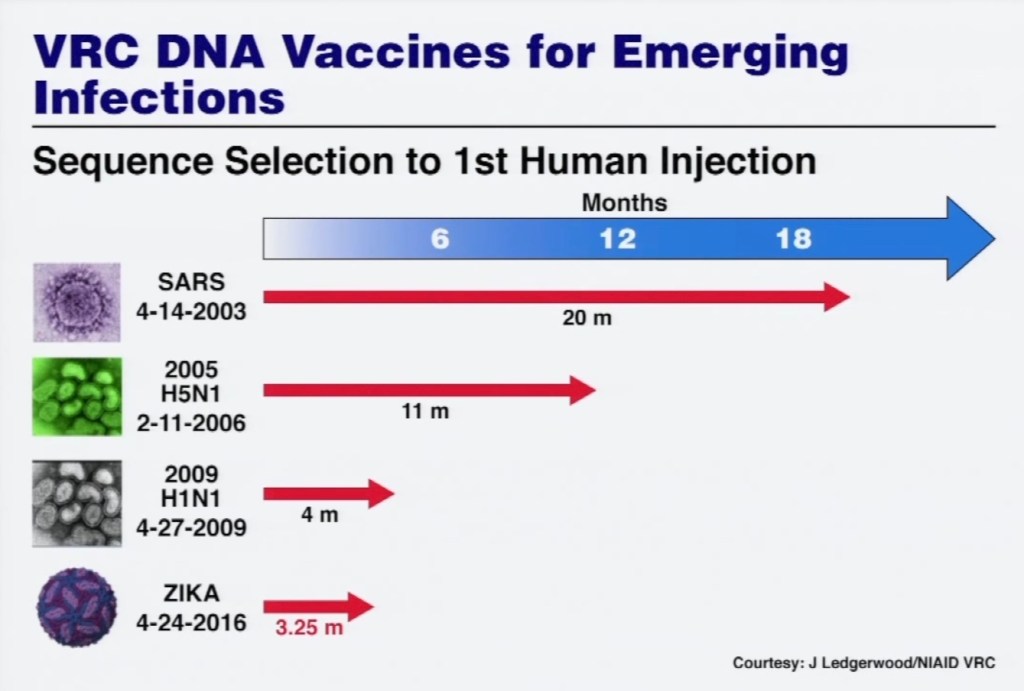
Fauci then agrees to the analogy provided by Ashish Jha the the Faculty Director of the Harvard Global Health Institute, are vaccines comparable to missiles? Governments invest in them but not necessarily to use them Ashish asks. Fauci says true except we want the platforms to develop the vaccines readily available not necessarily the vaccines itself.
There is a follow up question from Ashish where he asked Fauci if much like missiles do we rely on private players who build all the U.S. defense equipment and Fauci responds by saying you cannot buy a vaccine before it’s needed you need to have a factory ready to go so you don’t have to rely on companies. Because once you have factories it is immediately going to attrite “so you have to keep them warm is what they say”. In other words he means you need to have sufficient requirements to keep the vaccine development factories operational.
It’s yet another a coincidence this presentation took place in the very same month the virus was first purported leaked in the Wuhan labs.
No law will do it, create a culture of responsibility
When asked of the dual use issues of gain of function research which is bio weapon vs vaccine development. Fauci went all over the place. He says “If you ban all gain of function research then you are going to interfere with some of the important things we have to do”. He then points out that the Federal Government can only control what they fund and therefore they cannot control private enterprise from doing Gain of Function research unless they enact a law. He says “Which i think will not go a long way“ (ironic, he says that in Harvard Law). He rambled on “I don’t have a good answer but we try to create a culture of responsibility. Culture of responsibility is as good as the people who are responsible”. He then says “We know what happens with Anthrax and we know there are some crazy people out there who do crazy things, but i don’t think we are ever going to get away from that, no matter what you do. So there is no good answer other than to create a culture of responsibility when we do these things”. Then he apologizes saying he usually doesn’t answer questions like that.
He finally concludes by saying “the duration of the answer is disproportionate to what we know”. Phew! Was that euphemism to just say sorry that was whole pile of bull?
Fauci’s views directly contradict Harvey Feinberg’s skepticism on self regulation and his recommendation on establishing robust Global procedures for Gain of Function Research
Money trail ends at the Gates
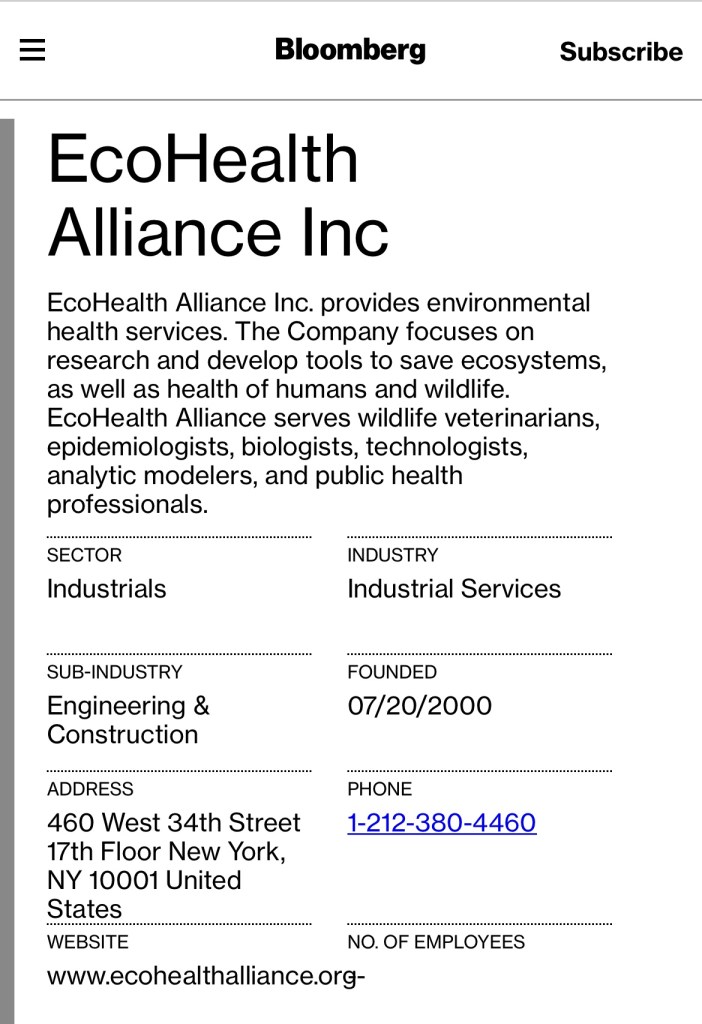
EcoHealth Alliance Inc is established on 20th July 2000
Bill and Melinda Gates announce the Decade of Vaccines in January 2010 wherein they commit $10 billion over 10 years.
In 2011 they announce a Global Action Plan and constitute their leadership council that governs this initiative includes:
- Rajeev Venkayya (Director, Global Health Vaccine Delivery at the Bill & Melinda Gates Foundation)
- Anthony Lake (Executive Director for UNICEF)
- Margaret Chan (Director General of the WHO)
- Anthony Fauci (Director of NIAID, part of the National Institutes of Health)
- Joy Phumaphi (Chair of the International Advisory Committee and Executive Secretary, African Leaders Malaria Alliance).
On September 4th 2019 (close to the first detected case), Bill & Melinda Gates Foundation invests $55 million in an infectious disease collaboration that could reach up to $100 million in total funding. During 2014 to 2018 BioNTech filed several patents on mRNA mechanisms and to protect its intellectual property in various technology platforms and their application in mRNA based cancer immunotherapy.
In August 2020 NIH awards EcoHealthAlliance $7.5 million grant. Soon after NIH reversed their decision in a rush and put all funding to a halt as per a statement issued by EcoHealthAlliance. This happened as the Trump administration turned on the heat on the company for its association with the Wuhan lab.
BioNTech and Pfizer announce they are going to co-develop the COVID-19 vaccine in March 2020.
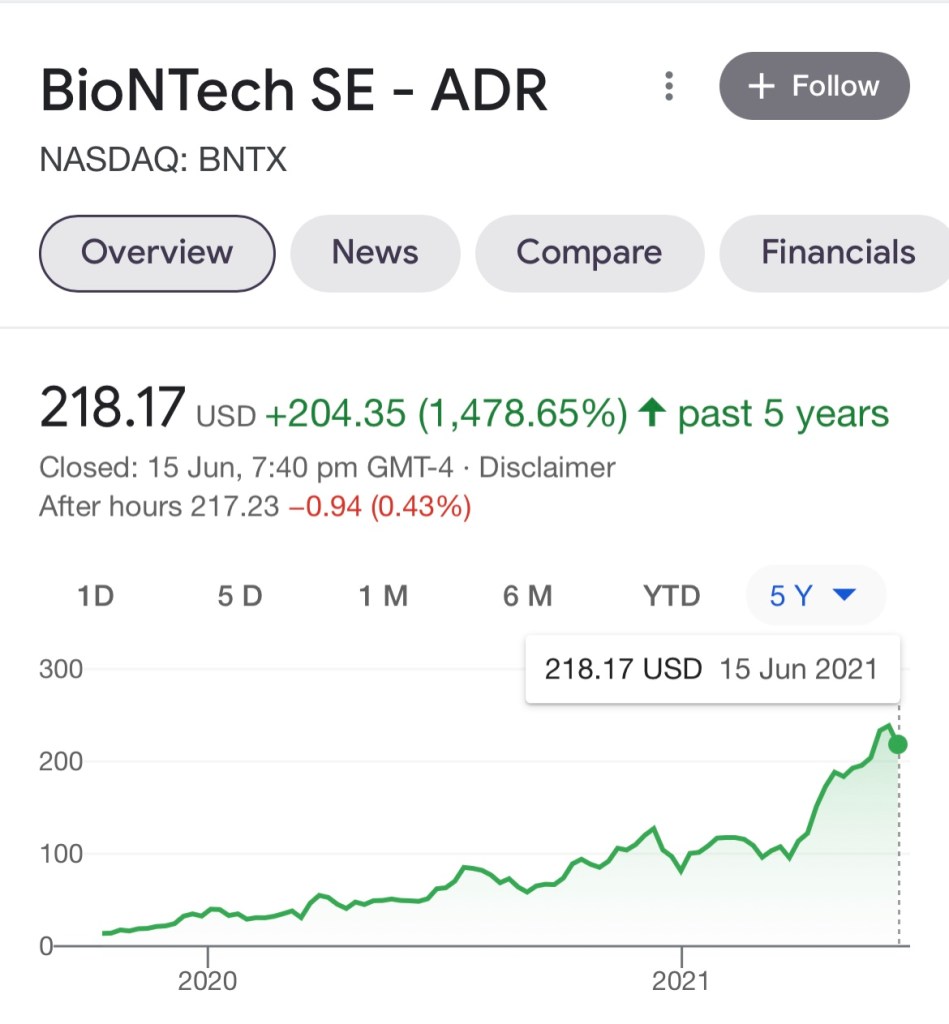
BioNTech share price rose from 13.82 USD in October 2019 to 218.17 USD on 15th June 2021. Almost 16 times the price.
All above events are excerpts based on secondary research from various sources linked in the blog and is not a matter of my opinion.

 AVALUECREATOR